Professional Tree Trimming That Doesn’t Destroy the Tree
There’s a right way and a wrong way to trim a tree. The wrong way is immediately obvious - you’ve seen them. Oaks that look like hat racks because someone topped them. Crape myrtles hacked back to knuckles every year. Trees with one-sided canopies because someone cut everything near the house and left the rest.
The right way is less obvious because when it’s done well, the tree just looks like a healthy, well-shaped tree. That’s the goal. Remove what needs to go, maintain the tree’s natural form, and leave it healthier than you found it.
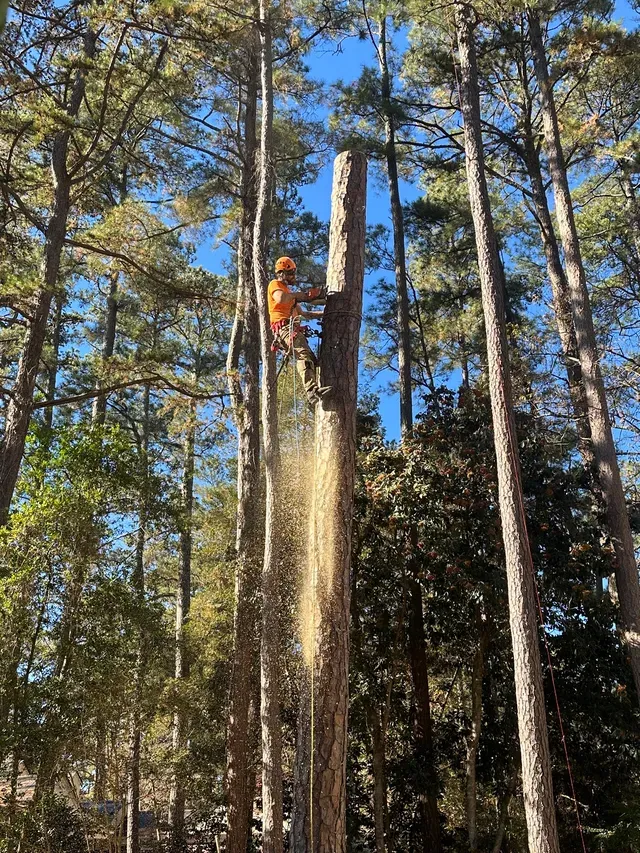
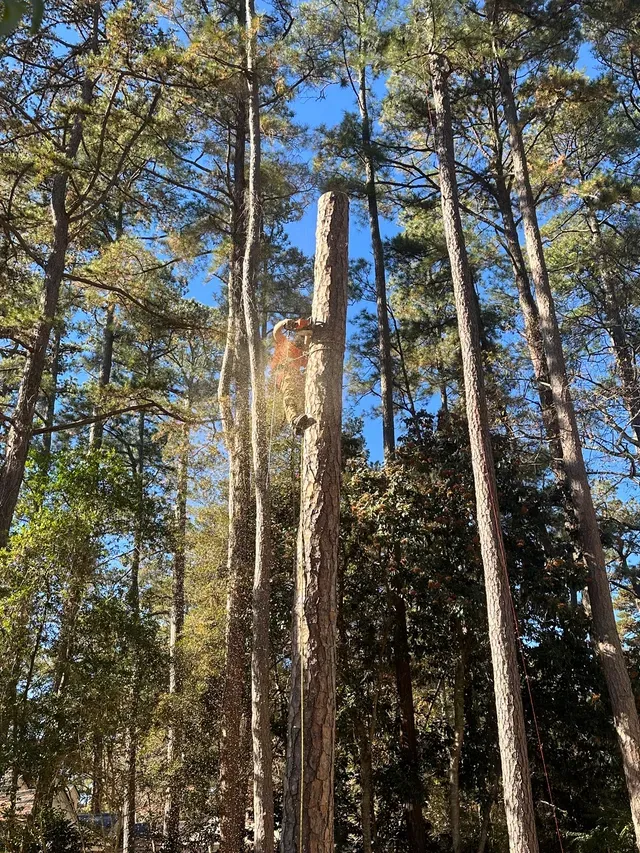
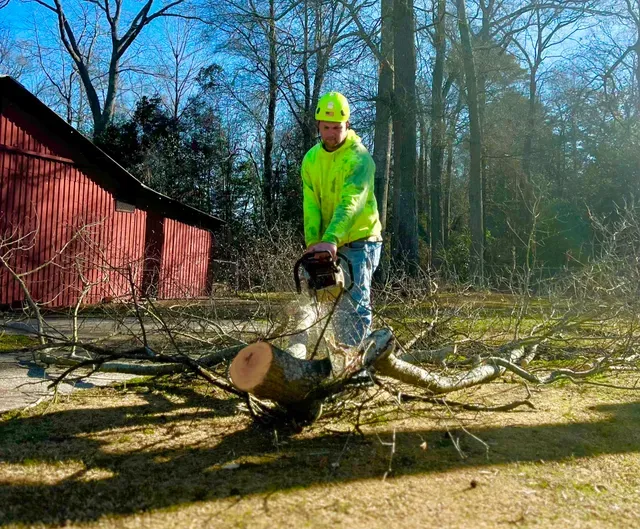
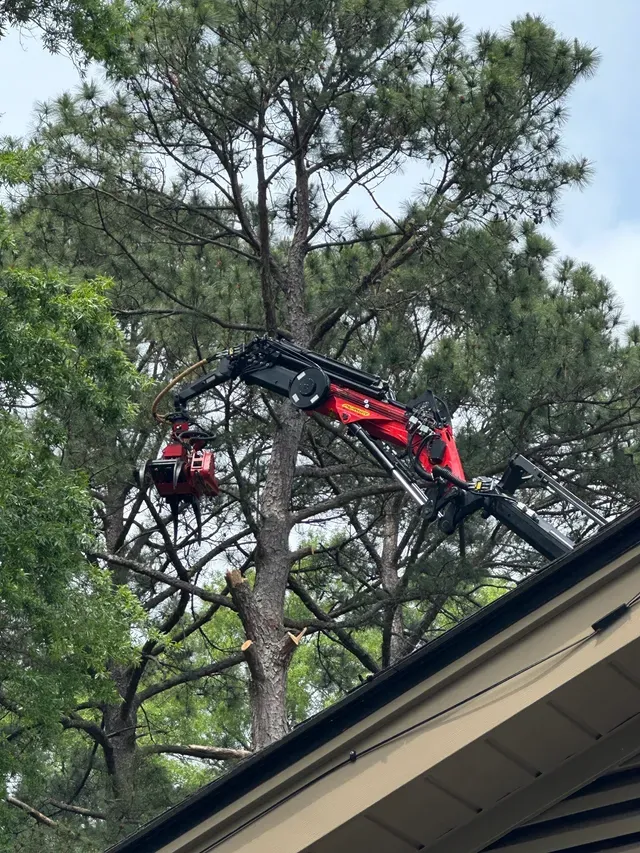
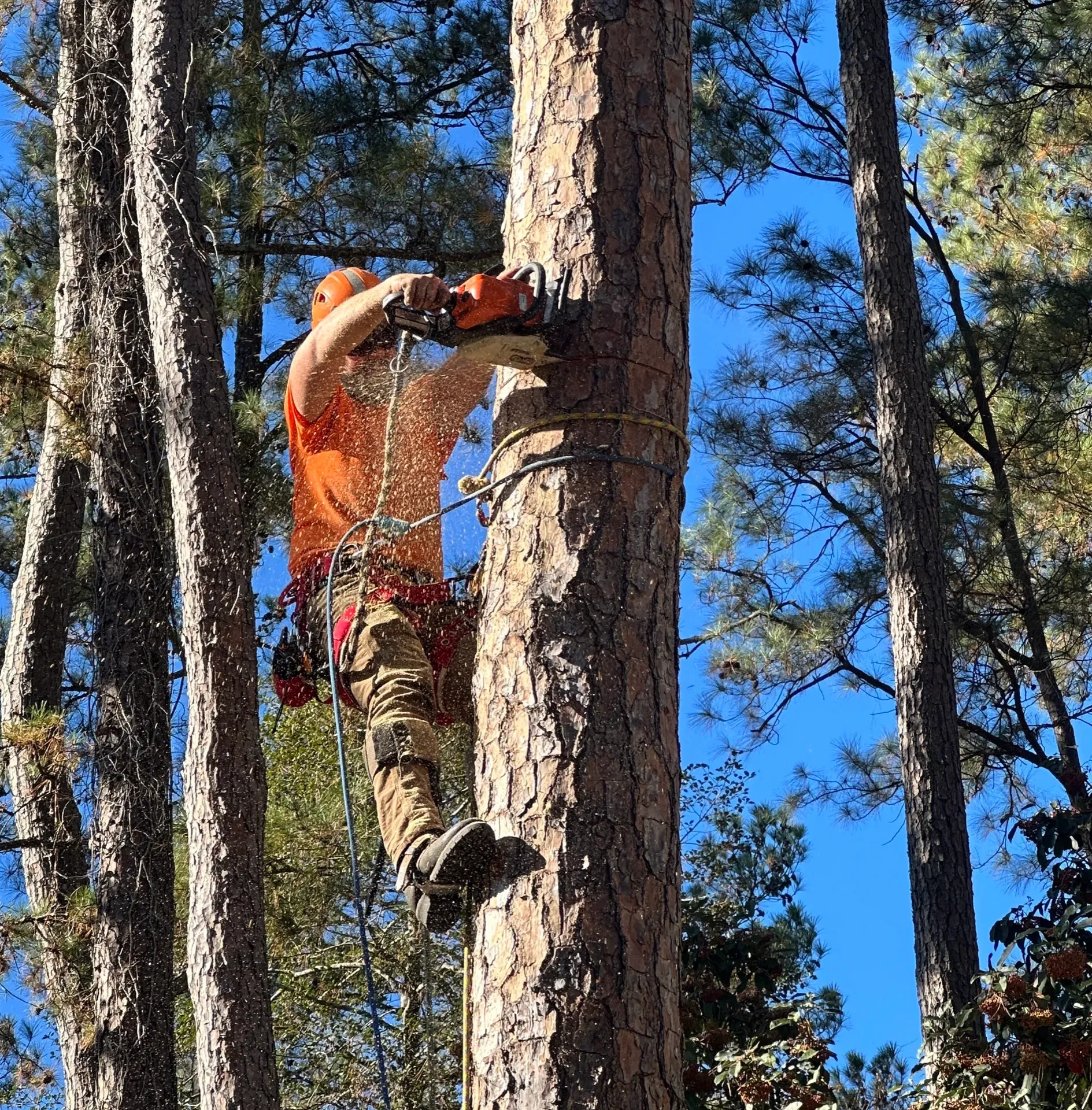
We trim and prune trees across Nash, Wayne, Wilson, Edgecombe, Halifax, Johnston, and Pitt counties. Our crews handle everything from small ornamental pruning to major crown work on 80-foot oaks.

Types of Tree Trimming We Perform
Crown Reduction
When a tree has outgrown its space - too tall for comfort, limbs encroaching on a roof, canopy spreading over a driveway or into a neighbor’s yard. Crown reduction selectively shortens branches by cutting back to lateral branches that are large enough to assume the terminal role. The tree gets smaller while maintaining its natural shape.
This is different from topping. Topping cuts branches to stubs. Crown reduction cuts to existing branch junctions. The tree responds to proper reduction cuts by continuing normal growth. It responds to topping cuts by sending up dozens of weak watersprouts from each stub.
Deadwood Removal
Every mature tree carries dead wood. Branches die from shading, disease, storm damage, or just age. Dead branches are unpredictable - they can fall on a calm day without warning. Removing deadwood is the most basic and important trimming service.
We typically remove all dead branches 2 inches in diameter and larger. Smaller deadwood in the interior canopy is normal and not usually worth the labor to remove unless you want the tree cleaned up thoroughly.
Clearance Trimming
Lifting or pulling back the canopy to clear:
- Structures. Branches rubbing on your roof damage shingles and give pests a highway onto your house. We establish clearance of at least 5-10 feet from the roofline.
- Driveways and walkways. Low-hanging branches that you duck under or that scrape the top of your truck. We raise the canopy to provide vehicle and pedestrian clearance.
- Power lines. We trim back toward the tree from the line side, maintaining clearance. For branches in direct contact with lines, the utility company handles that.
- Fences and property lines. Trimming back to the property line or establishing clearance over a fence.
- Sight lines. Branches blocking the view from a window, a security camera, or a driveway sightline at the road.
Canopy Thinning
Selectively removing interior branches to reduce wind load and allow light penetration. A tree with a dense, heavy canopy catches wind like a sail. Thinning removes some of that sail area without changing the overall shape. The result: more light reaches your lawn underneath, the tree handles wind better, and air circulation through the canopy reduces fungal issues.
We typically thin no more than 15-20% of the live canopy in a single session. Removing too much stresses the tree and defeats the purpose.
Structural Pruning
For younger trees that are developing poor form. Crossing branches, co-dominant leaders (two main trunks competing), tight crotch angles that will fail as the tree matures. Addressing these issues while the tree is young is cheap and easy. Addressing them on a 60-foot tree is expensive and sometimes impossible.
If you’ve recently planted trees or have young trees in your yard (under 20 feet), structural pruning every 1-2 years is the best investment you can make in those trees’ futures.
Vista Pruning
Not quite trimming, not quite removal. Vista pruning selectively removes branches to open a view without removing the whole tree. Want to see the lake from your deck but there’s a tree in the way? We can open up windows in the canopy by removing specific branches. You keep the shade and the tree; you get the view.
Why Proper Technique Matters
Trees don’t heal like people. When you cut a branch, the tree doesn’t regenerate new wood to fill the wound. It compartmentalizes - it walls off the wound with chemical barriers and grows new wood around it. The wound itself is there forever.
That’s why cut location and technique matter:
The Branch Collar
Every branch has a slight swelling where it meets the trunk or parent branch - the branch collar. This collar contains the tree’s wound-closing chemistry. If you cut outside the collar, the tree can close the wound efficiently. If you cut into the collar (a flush cut), you damage the tree’s ability to compartmentalize and open a direct pathway for decay into the trunk.
Proper Reduction Cuts
When shortening a branch, the cut goes just beyond a lateral branch that’s at least one-third the diameter of the branch being removed. This lateral becomes the new leader and the tree continues normal growth. Cut to a lateral that’s too small and it can’t sustain the energy demands - the branch dies back and you’re left with a dead stub.
The 25% Rule
Never remove more than 25% of a tree’s live canopy in one session. The canopy is the tree’s food factory - every leaf is a solar panel. Remove too much and the tree can’t feed itself. It responds by throwing out watersprouts (fast, weak growth) everywhere in a desperate attempt to rebuild its canopy. This stress also weakens its defenses against insects and disease.
If a tree needs more than 25% removed, we do it in stages over 2-3 years.
Seasonal Considerations
Winter (December - February) - Best Time
- Tree is dormant, minimal stress from pruning
- No foliage means the climber can see the entire branch structure
- Easier to identify deadwood, crossing branches, and structural issues
- Less insect and disease activity to enter fresh wounds
- Often easier to schedule
Spring (March - May) - Good for Most Species
- Some species (oaks, elms) are better pruned before bud break to minimize disease transmission
- Avoid pruning during active leafing out - the tree is spending energy on new growth and pruning adds stress
- Good time for structural pruning on young trees
Summer (June - August) - Selective Work Only
- Deadwood removal and hazard limbs are fine any time
- Avoid heavy crown work - heat stress plus pruning stress can be too much
- Best time to identify deadwood because live branches have foliage and dead ones don’t
Fall (September - November) - Avoid If Possible
- Trees are preparing for dormancy and moving energy into root storage
- Pruning triggers a growth response the tree doesn’t need going into winter
- Many fungal diseases produce spores in fall, and fresh wounds are entry points
- If you must trim in fall, limit it to deadwood and immediate hazards
Common Trees We Trim in Eastern NC
Eastern NC has a distinctive tree mix. The species we work on most:
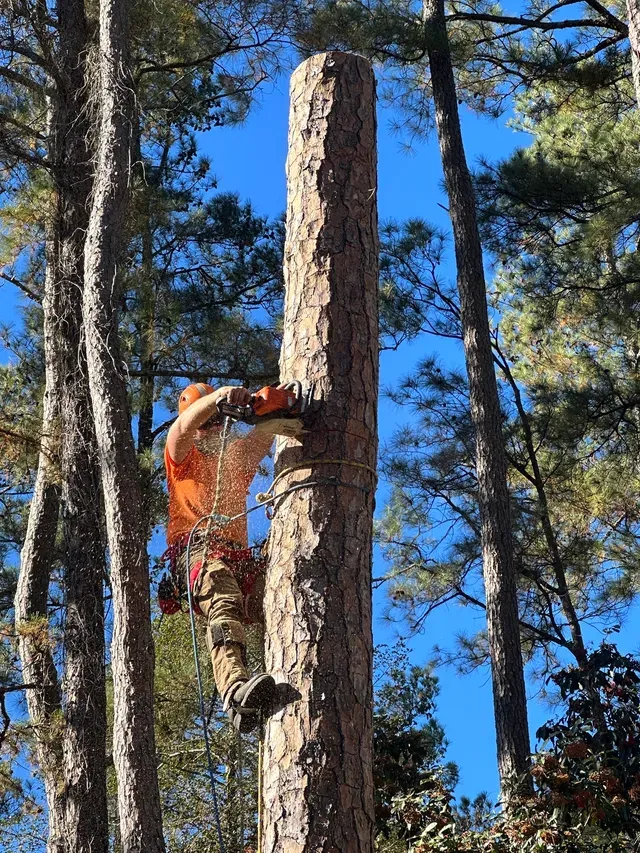
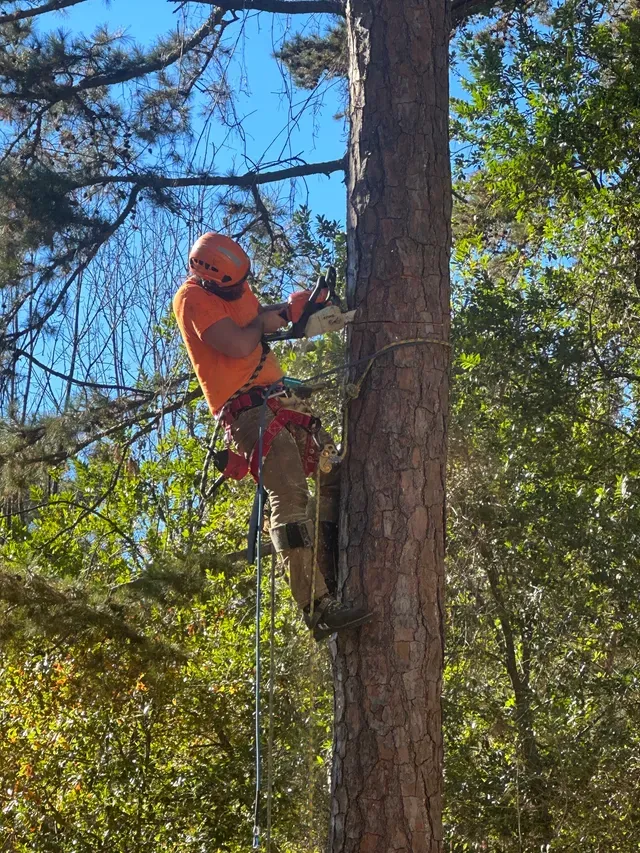
- Loblolly Pine - Doesn’t need much trimming. Mainly deadwood removal and clearance lifting of lower branches.
- Water Oak - Fast grower, weak wood, constantly dropping branches. Needs thinning and deadwood removal every 2-3 years.
- White Oak - Slower growing, stronger wood, but develops massive canopies that need reduction when they overhang structures.
- Pecan - Huge trees with heavy limbs. Deadwood removal is critical - pecan deadwood falls without warning.
- Sweetgum - Fast growing, needs regular pruning to maintain form. Common in residential yards across Nash and Wayne counties.
- Crape Myrtle - We prune crape myrtles properly. No murder cuts. Light shaping, removal of crossed branches and suckers. That’s it.
- River Birch - Common ornamental. Thin canopy work and clearance trimming.
Pricing
Tree trimming cost depends on size, scope, and access. Here are realistic ranges for Eastern NC:
| Tree Size | Typical Cost |
|---|---|
| Small (under 25 ft) - ornamentals, crape myrtles | $150 - $300 |
| Medium (25-50 ft) - yard trees, young oaks | $300 - $700 |
| Large (50-75 ft) - mature oaks, pecans | $700 - $1,200 |
| Very large (75+ ft) - specimen trees | $1,200 - $1,500+ |
Multi-tree discounts apply when we’re trimming several trees on the same property. If you’re on a maintenance cycle and we come back annually or every few years, subsequent visits are less because we’re maintaining what we’ve already established.
Related Services
If a tree is beyond saving, our tree removal team can take it down safely. For storm-damaged limbs or trees threatening your home, our emergency tree service is available 24/7. Need stumps ground after removing a dead tree? See stump grinding.
Service Area
We provide tree trimming throughout our 9-county service area:
- Nash County - Rocky Mount, Nashville, Spring Hope, Bailey
- Wayne County - Goldsboro, Pikeville, Fremont, Mount Olive
- Wilson County - Wilson, Lucama, Elm City, Black Creek
- Edgecombe County - Tarboro, Pinetops, Speed
- Halifax County - Roanoke Rapids, Weldon, Enfield, Scotland Neck
- Greene County - Snow Hill, Walstonburg, Hookerton, Maury
- Lenoir County - Kinston, La Grange, Deep Run, Pink Hill
- Johnston County - Smithfield, Selma, Four Oaks
- Pitt County - Greenville, Winterville, Ayden, Farmville
Get a Free Estimate
Call (252) 506-0099 or email now@dctreecutting.com to schedule a look. We’ll walk your property, assess each tree, and give you a per-tree price. Goldsboro area: (919) 276-0144.
Typical Price Range
$150 - $1,500 per tree
Actual price depends on the specific job.