When a Tree Becomes an Emergency
A tree that stood for 60 years decides tonight is the night. A hurricane nobody expected to track this far inland snaps pines across the county like matchsticks. An ice storm loads branches until something gives. A summer thunderstorm drops a massive limb onto your car in the driveway.
You don’t pick when these things happen. That’s why we answer the phone around the clock - (252) 506-0099, any time, any day. We run emergency response crews out of both our Rocky Mount and Goldsboro offices to cover Nash, Wayne, Wilson, Edgecombe, Halifax, Greene, Lenoir, Johnston, and Pitt counties.
Situations We Respond To
Tree on a Structure
A tree or major limb on a house, garage, shed, or commercial building. This is our highest priority call. The tree needs to come off the structure carefully - you can’t just pull it off with a truck or it causes more damage on the way down. We section-remove the tree from the structure, tarp any openings in the roof, and clear all debris.
If the tree is still partially attached and leaning on the building, it’s under load and unpredictable. The crew has to read the tension and compression in every cut. Get it wrong and the tree shifts, driving further into the structure or rolling off in an uncontrolled direction.
Tree on a Vehicle
Cars, trucks, RVs, boats - we’ve removed trees from all of them. The vehicle is usually a total loss if a significant tree hit it, but the tree still needs to come off safely. We work with your auto insurance the same way we work with homeowner claims.
Tree Blocking a Road or Driveway
You can’t get in or out. Emergency vehicles can’t access your property. A tree across a road is an immediate hazard. We prioritize these calls because access matters - if an ambulance can’t get to your house, that tree needs to move right now.
Hanging Limbs and Widow-Makers
A large limb that broke but didn’t fall. It’s hung up in the canopy, wedged against other branches, and it could drop at any time - on a walkway, a driveway, a play area. These are called widow-makers for a reason. They’re unstable and they don’t announce when they’re coming down.
Removing a hung-up limb is tricky because it’s under tension in unpredictable ways. The crew has to access the canopy and free the limb in a controlled manner, which sometimes means rigging it before cutting it loose.
Leaning Trees About to Fail
Root plate lifting on one side, visible cracking in the trunk, a pronounced lean that wasn’t there yesterday. These trees haven’t failed yet, but they’re going to. If the lean is toward a structure, vehicle, or high-traffic area, this is an emergency that shouldn’t wait for regular scheduling.
We’d rather take down a leaning tree before it falls than remove it from your roof after it falls. It’s safer and cheaper.
Power Line Hazards
Important: If a tree is actively on a power line or a power line is down, call your utility company first (Duke Energy: 1-800-769-3766) and then call us.
We do not work on energized power lines. That’s the utility company’s job. What we do:
- Remove trees that have fallen near but not into lines
- Remove trees or limbs that are at imminent risk of falling into lines
- Clear trees after the utility company has de-energized the line
- Coordinate with the utility to schedule concurrent work when possible
After major storms, utility crews and tree crews are often working the same properties. We’ve done this enough to know the coordination process.
Our Emergency Response Process
1. The Call
When you call (252) 506-0099, tell us:
- What happened (tree on house, tree across road, etc.)
- Your address
- Whether power lines are involved
- Whether anyone is injured or trapped
- A callback number
If anyone is injured or trapped, call 911 first. We’re tree guys, not first responders. We work alongside fire and rescue but they lead on life-safety situations.
2. Triage and Dispatch
During normal weather, we can usually dispatch a crew within a couple of hours. During major storm events that produce high call volume, we triage:
- Immediate: Trees on occupied structures, trees blocking emergency access, trees on vehicles with occupants, active power line hazards
- Urgent: Trees on unoccupied structures, trees blocking driveways, leaning trees at imminent risk of failure
- Scheduled priority: Trees down in yards, trees in non-critical locations, cosmetic damage
We’re honest about timing. If we’re 6 hours out because we’re working through a storm backlog, we’ll tell you that. We don’t promise 30 minutes and show up in 4 hours.
3. Site Assessment
When we arrive, the first thing we do is assess the situation - not grab a chainsaw. We need to understand:
- Where is the tree under tension and compression?
- Is the tree still attached at the base or fully detached?
- Are there secondary hazards (other damaged trees, unstable structures, utilities)?
- What’s the safest sequence to disassemble this?
- Where can we stage equipment?
Five minutes of assessment prevents an hour of problems.
4. Hazard Removal
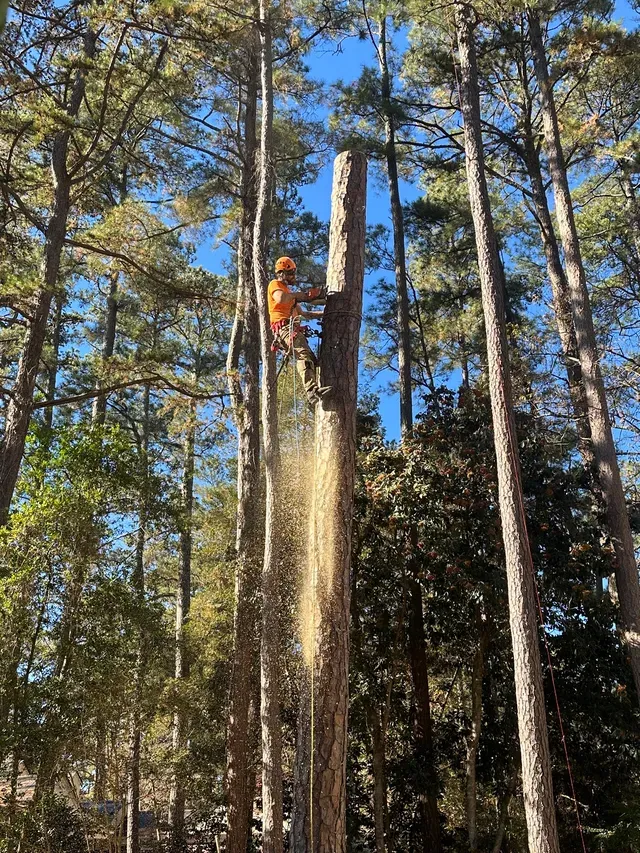
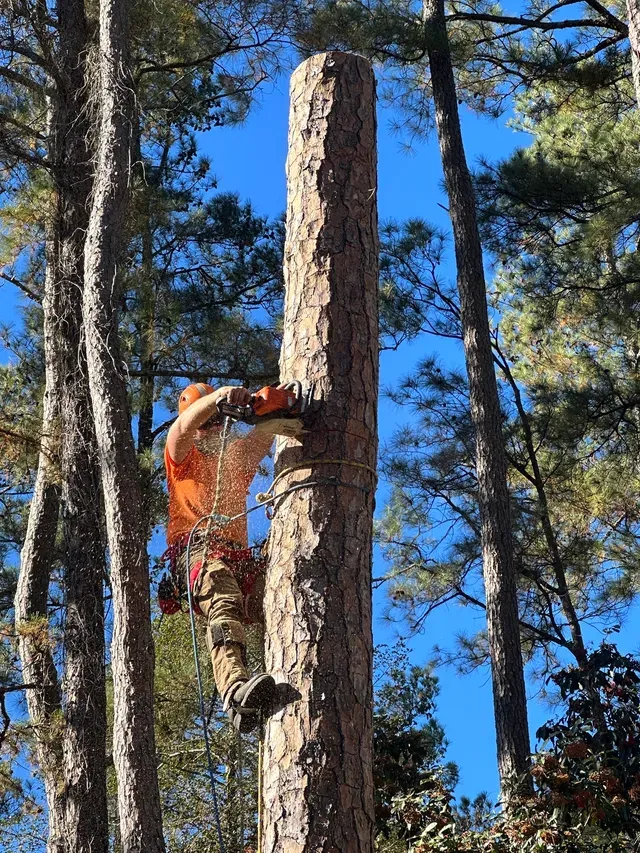
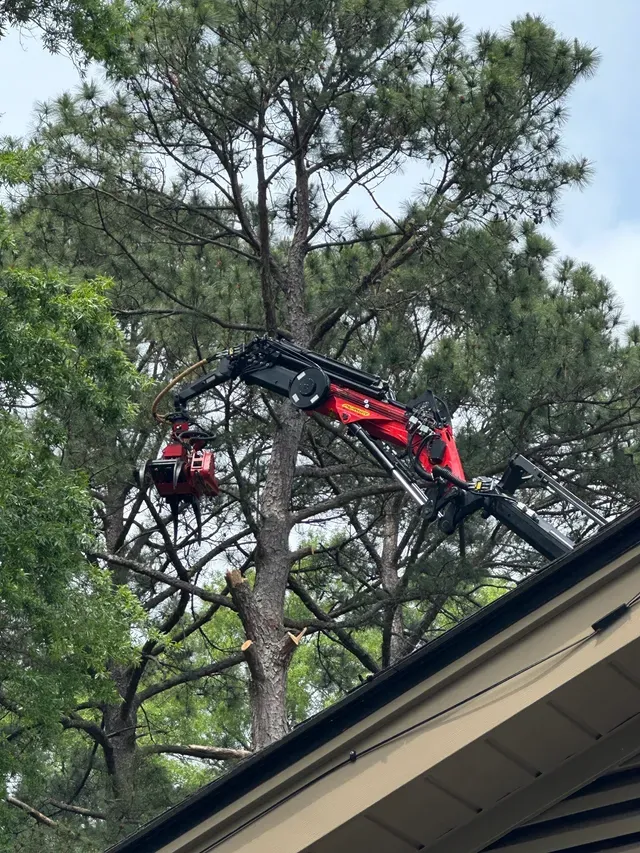
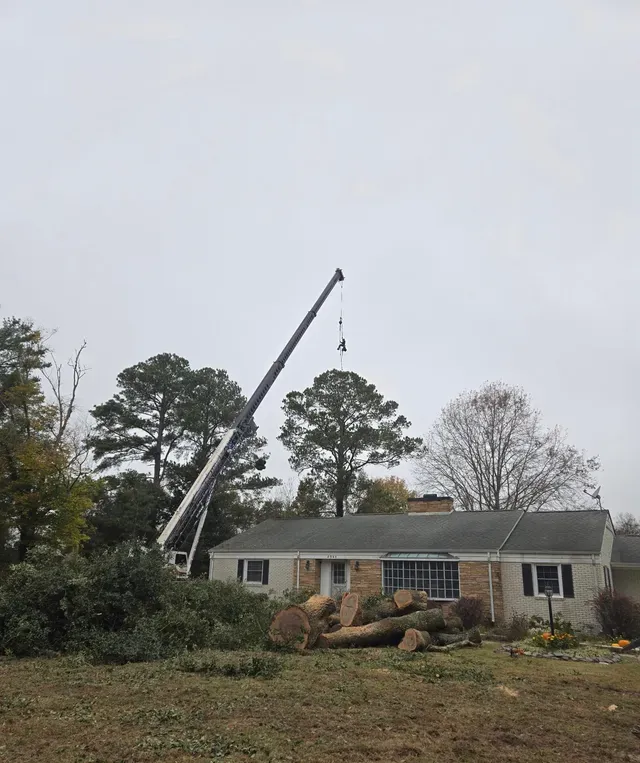
We remove the tree from the structure or roadway using sectional cutting, rigging, and equipment as needed. For trees on houses, this means cutting the tree apart in sections on the roof, lowering pieces off without dragging them across the roof surface. For road clearing, we buck and clear as fast as safely possible.
5. Temporary Protection
If a tree went through your roof, we tarp the opening once the tree is off. We carry tarps and the materials to secure them. This prevents rain from causing additional damage while you arrange permanent repair. The tarp job is functional, not pretty - it’s meant to keep water out until a roofer gets there.
6. Debris Removal
We remove all debris from the emergency - not just the part that was on your house. The whole tree comes out. Logs, brush, chips - everything leaves. In some storm scenarios where we’re running between multiple emergencies, we may do hazard removal first and return for full cleanup within 24-48 hours. We’ll tell you if that’s the case.
Working With Insurance
Most homeowner insurance policies cover tree removal when a tree damages an insured structure. Here’s what we know from working with adjusters across Eastern NC for years:
What’s Typically Covered
- Tree removal from a damaged structure (house, garage, fence, shed)
- Debris removal from the affected area
- Temporary protection (tarping)
- Stump removal if the stump is in a location that prevents repair
What’s Typically Not Covered
- Tree removal when the tree falls but doesn’t hit an insured structure (it just fell in the yard)
- Preventive removal of a healthy tree
- Trees that were clearly dead or neglected before the event (adjusters look for this)
How We Help
- We document everything with timestamped photos before, during, and after removal
- Our invoices are itemized the way adjusters expect - tree removal, debris removal, tarping as separate line items
- We can meet your adjuster on site to walk the damage
- We provide certificates of insurance showing our coverage
We don’t file your claim for you, and we don’t inflate invoices. We charge what the work costs and document it accurately. That’s what gets claims paid without hassle.
Storm Preparedness
Eastern NC gets hit. Hurricanes, tropical storms, derechos, ice storms, severe thunderstorms - we get them all. After every major weather event, our phones light up with calls that could have been prevented.
Before Storm Season
The best emergency tree service is the one you never need. Before hurricane season (June 1) or before a known storm:
- Remove dead trees. They’re coming down in the next big storm. It’s not a question of if.
- Trim deadwood from large trees. Dead limbs are the first things to fall in wind.
- Address leaning trees. A tree that’s already leaning has compromised roots. Wind will finish the job.
- Thin dense canopies. A thinned canopy lets wind pass through instead of catching it like a sail.
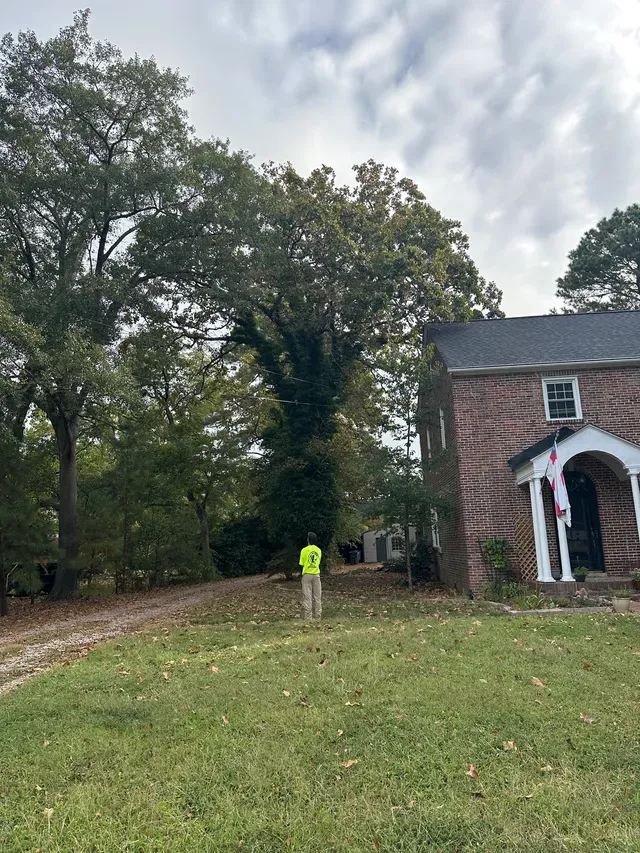
We offer pre-storm property assessments. We walk your property, identify high-risk trees and limbs, and give you a plan with pricing to address them. It’s always cheaper to deal with a tree on your schedule than to deal with it on the tree’s schedule.
Related Services
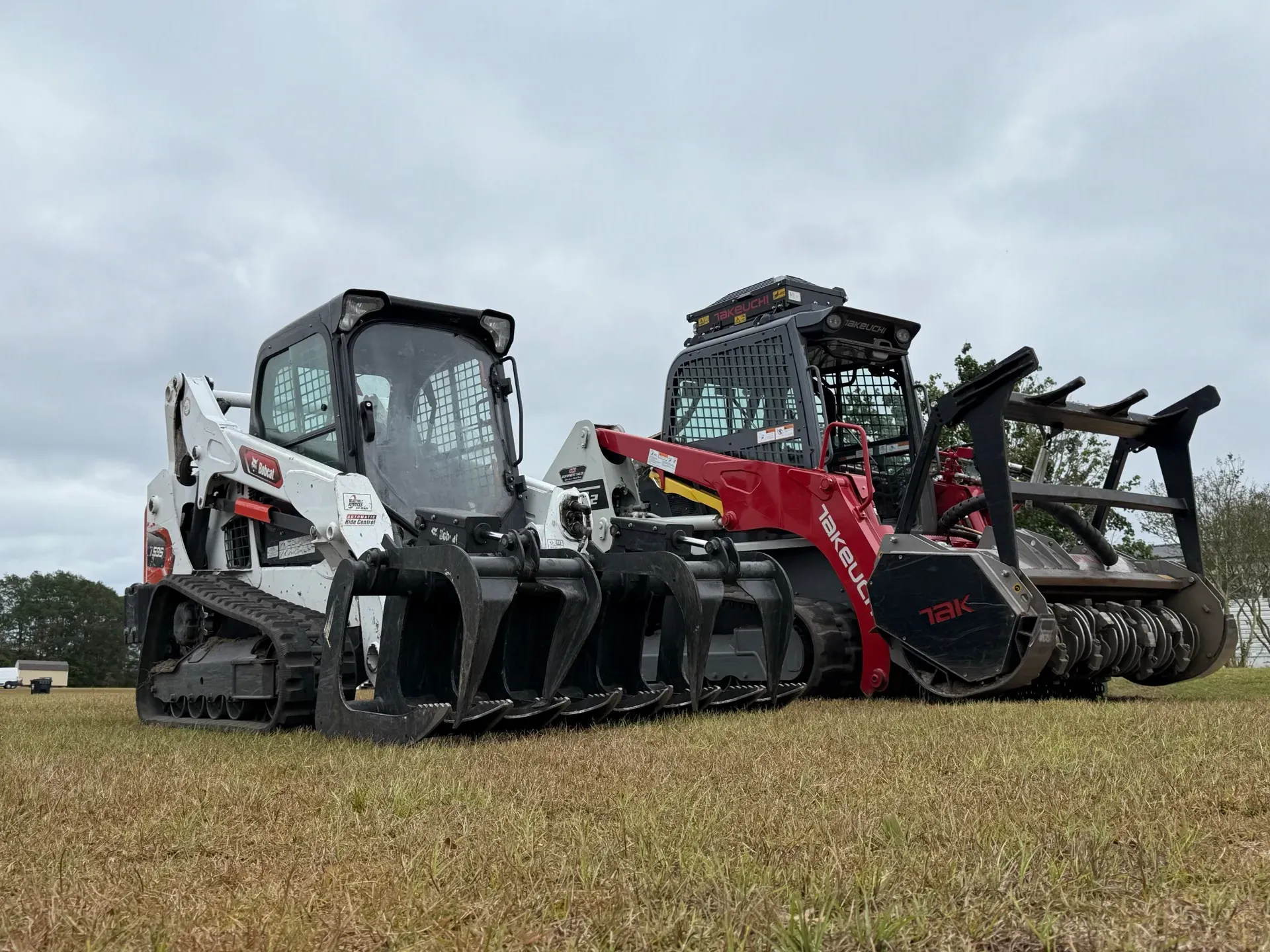
After the emergency is handled, you may need stump grinding to remove what’s left. For debris hauling, our grapple truck can clear the site fast. If you have additional trees that need preventive removal, see our tree removal service.
Service Area
Emergency response from two locations:
Rocky Mount Office - (252) 506-0099 Covers Nash, Edgecombe, Halifax, Wilson (north), and surrounding areas.
Goldsboro Office - (919) 276-0144 Covers Wayne, Greene, Lenoir, Johnston, Pitt, Wilson (south), and surrounding areas.
Both numbers connect to the same dispatch. Call either one - we’ll send the closest available crew.
Call Now
Tree emergencies don’t wait for business hours. Neither do we.
(252) 506-0099 - 24 hours, 7 days a week.
Email now@dctreecutting.com for non-emergency inquiries, but if a tree is on your house, pick up the phone.
Typical Price Range
Quote-based, premium pricing
Actual price depends on the specific job.