March 15, 2026 by Anthony Caracappa
Stump Grinding vs Stump Removal: What's the Difference?
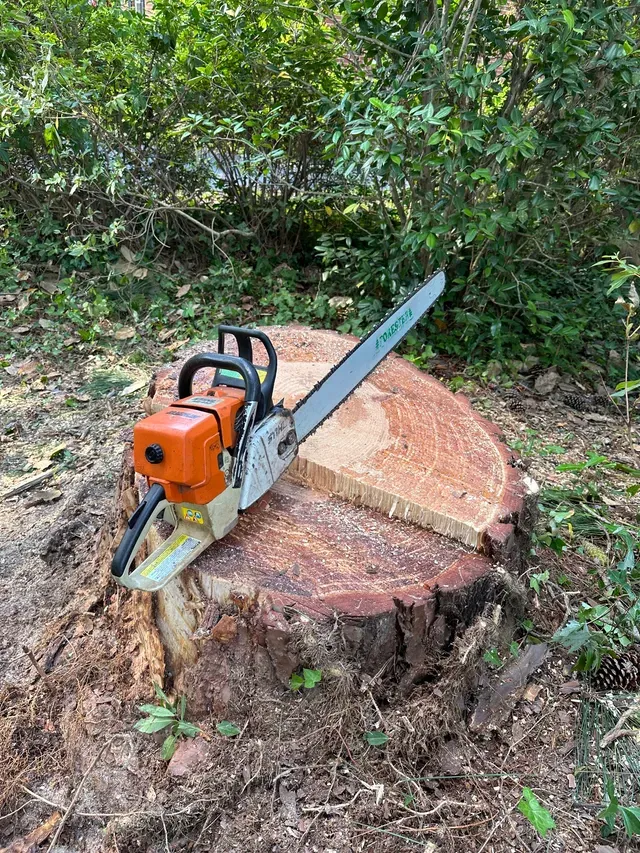
The Question I Get After Every Tree Removal
Nine times out of ten, after we drop a tree and haul it off, the homeowner looks at the stump sitting there in their yard and asks: “So what do we do about that?” It’s the part of the job nobody thinks about until the tree is gone and they’re staring at a flat-cut stump six inches above grade, wondering if it’s going to sprout, attract termites, or just sit there looking ugly for the next decade.
The short answer is you’ve got options. The longer answer - and the one I want to walk through here - is that stump grinding vs stump removal is not the simple choice most people think it is, the equipment matters, and the right method depends entirely on what you’re planning to do with that spot afterward. I’ve been running tree removal and stump grinding jobs across Eastern North Carolina for years, and I still see homeowners get bad advice on this. So let me break it down the way I explain it standing in someone’s yard.
Three Methods, Three Pieces of Equipment
Most companies talk about stump grinding like it’s one thing. It’s not. We run three completely different setups depending on the job, and each one has a purpose.
1. Dedicated Stump Grinder - Vermeer SC48TX
This is what most people picture when they hear “stump grinder.” The Vermeer SC48TX is a self-propelled, tracked machine with a cutting wheel full of carbide teeth. You swing the wheel side to side across the stump and it chews the wood into small chips, grinding down below grade - typically 6 to 12 inches below the surface.
How it works: The cutting wheel spins at high RPM and you work it across the stump in passes. Each pass takes the stump down a few inches. The result is a pile of wood chips mixed with dirt right where the stump used to be. One of our customers, Willard, described the grindings as “small wood chips and small chunks, kinda like pine bark mulch” - and that’s exactly right. It looks and feels like a coarse mulch.
What it’s best for:
- Single stumps in maintained lawns
- Tight-access residential yards - this machine is self-propelled and narrow enough to fit through most fence gates
- Stumps up to about 36 inches where you just want them gone below grade
- Situations where you’re going to plant grass, put in a flower bed, or just want the stump out of sight
Pros: Minimal yard damage. Precise. Leaves the surrounding landscape intact. The grindings can be raked back into the hole or spread as mulch.
Cons: The roots stay in the ground. They’ll decompose over time - usually 5 to 10 years depending on species - but they’re still down there. If you’re planning to build on that spot, grinding alone won’t cut it.
2. Skid Steer Stump Grinder - Dipperfox SC500 on Bobcat
The Dipperfox SC500 is a stump grinder attachment that mounts on our Bobcat skid steer. Instead of a spinning cutting wheel like the Vermeer, the Dipperfox uses a large conical screw that drills down into the stump and rips it apart. It’s aggressive and fast.
How it works: You position the Bobcat over the stump, lower the Dipperfox onto it, and the cone bores straight down through the wood. It shreds the stump from the center out. On a clearing job where we’ve already got the Bobcat on site doing other work, this is the efficient play - we don’t have to trailer in a separate piece of equipment.
What it’s best for:
- Multiple stumps on a land clearing or forestry mulching job
- Situations where the Bobcat is already on site
- Medium-sized stumps where speed matters more than surgical precision
- Rural properties where some ground disturbance isn’t a concern
Pros: Fast. No extra mobilization cost when the Bobcat is already there. Handles clusters of stumps efficiently. Tristan hired us to grind a cluster of small stumps where he was prepping for building. He said we “got all of the surrounding roots to ensure we were set” - and that’s the kind of thoroughness you get when the skid steer is right there and we can work the area aggressively.
Cons: The Bobcat leaves tracks. It’s not the right tool for a manicured lawn where you care about every blade of grass. It also needs more access width than the walk-behind Vermeer.
3. Excavator Dig-Out
This isn’t grinding at all. This is full stump removal - we dig the entire stump and root ball out of the ground with our excavator. The stump, the lateral roots, the tap root if there is one - everything comes out.
How it works: The excavator digs around the stump, severs the major roots, and pulls the whole thing out of the ground. What you’re left with is a hole - sometimes a big one depending on the tree species and root structure. That hole needs to be backfilled, compacted, and graded.
What it’s best for:
- Building prep where footings, foundations, or slabs are going in
- Sites where underground utilities are being run through the root zone
- Large stumps (36”+) on properties that are already being graded or cleared
- Any situation where the roots themselves are the problem - heaving sidewalks, cracking foundations, interfering with drainage
Pros: Total removal. No roots left to decompose, shift, or cause problems later. If you’re building, this is the only method that gives you a clean slate.
Cons: It’s the most disruptive method by far. You’ll have a hole that needs fill dirt. The surrounding area gets torn up. It costs more. And it only makes sense when you actually need the roots gone.
Side-by-Side Comparison
| Vermeer SC48TX | Dipperfox SC500 | Excavator Dig-Out | |
|---|---|---|---|
| Best for | Single stumps, residential lawns | Multiple stumps, clearing jobs | Building prep, full root removal |
| Depth | 6–12” below grade | 6–12” below grade | Complete removal |
| Root removal | No - roots left to decompose | Partial - gets nearby roots | Yes - full root ball |
| Soil disturbance | Minimal | Moderate | Significant |
| Cost range | $150–$500+ per stump | Often bundled with clearing | $500–$2,000+ per stump |
| Timeline | 30 min – 2 hrs per stump | 15 min – 1 hr per stump | 1–4 hrs per stump |
| Access needed | Gate width (36”+) | Skid steer width (6’+) | Excavator access (10’+) |
Which Method for Your Situation
Single stump in a maintained lawn: Vermeer SC48TX, every time. We roll the grinder in, chew it down below grade, rake the grindings back in, and your yard barely looks like we were there.
Multiple stumps on a clearing job: Dipperfox SC500 on the Bobcat. If we’re already out there doing land clearing or forestry mulching, the Dipperfox attachment goes on the skid steer and we knock out every stump on site without bringing in extra equipment. This is where you save money.
Building prep where roots must come out: Excavator. If a contractor, engineer, or county inspector is going to look at that ground before a slab goes down, grinding isn’t enough. You need the root ball out. Tristan’s job was a good example - he was prepping for a building project and needed to know the stumps and roots were completely handled.
Tight-access residential - behind a fence, between structures: Vermeer. It’s self-propelled and compact enough to fit through a standard gate. The Bobcat and excavator aren’t getting back there.
Large stumps, 36 inches and up: Depends on what’s next. If you’re planting grass, the Vermeer stump grinder will handle it - it just takes longer on a big stump. If you’re building or grading, bring in the excavator.
Not sure which method? Request a free estimate and we’ll recommend the right approach for your situation.
What Happens After Grinding
After we grind a stump with the Vermeer or Dipperfox, you’re left with a mound of wood chip grindings mixed with soil. That pile is bigger than you’d expect - the stump was solid wood underground, and now it’s been shredded into loose material that takes up more volume.
Here’s what to expect:
- Immediately after: A mound of grindings 6 to 12 inches above the surrounding grade. We rake it roughly level before we leave.
- Over the next few months: The grindings settle and decompose. The mound sinks. You’ll probably need to top it off with soil once or twice.
- If you want grass: Rake out the excess grindings (use them as mulch in garden beds - it’s good stuff), bring in a few inches of topsoil, and seed or sod. Most people see full grass coverage within one growing season.
- The remaining roots: They’re still underground. Over the next several years they’ll break down naturally. You might see some settling along the old root lines as that happens. Totally normal.
What Happens After Excavator Removal
Excavator removal is a different story. You’ve got a hole in the ground - sometimes 3 to 4 feet deep and 6 to 8 feet across depending on the root system. That hole needs:
- Fill dirt - clean, compactable fill, not topsoil. You’re backfilling a structural void.
- Compaction - especially if anything is being built on that spot. Loose fill will settle unevenly.
- Grading - match the surrounding grade so water drains properly.
- Topsoil and seed - if it’s going back to lawn.
We handle all of this as part of the job. You’re not getting left with a crater in your yard.
Stump Grinding Cost in Eastern NC
I’m not going to give you a flat rate because stump pricing depends on too many variables - diameter, species (hardwoods take longer than pines), root structure, access, how many stumps, and whether we’re already on site for tree removal. But here’s the general framework:
Vermeer stump grinding (standalone visit):
- Small stumps (under 12” diameter): $150–$250
- Medium stumps (12”–24”): $250–$400
- Large stumps (24”–36”): $400–$600
- Extra large (36”+): $600+ depending on species and access
- Multiple stumps on the same visit get a per-stump discount
Dipperfox grinding (on clearing jobs):
- Usually bundled into the overall clearing price
- When quoted separately, typically 20–30% less than standalone Vermeer pricing because the equipment is already mobilized
Excavator stump removal:
- Small to medium stumps: $500–$1,000
- Large stumps: $1,000–$2,000+
- Includes backfill and rough grading
- Often bundled with site prep or land clearing
For more details on our stump grinding service and what’s included, check the service page. We’re not the cheapest stump grinding company in Eastern North Carolina, and I’m straightforward about that. We carry full insurance - general liability, workers comp, and commercial auto - and we use commercial-grade equipment that gets the job done right. You’re paying for a crew that shows up with the right machine for your specific situation, not a one-size-fits-all approach.
Bundling With Tree Removal vs. Standalone Stump Jobs
The most cost-effective way to handle stumps is to grind them the same day we take the tree down. We’re already on site, the equipment is there, and there’s no second mobilization charge. When customers get a quote for tree removal, I always include stump grinding as a line item so they can see exactly what it costs to handle everything in one visit.
That said, plenty of people skip the grinding on day one and call us back later. Teresa had us out for tree work - a huge pecan, a dying pine, dogwoods, holly bushes - and didn’t get the stumps ground at the time, but mentioned she might call us back to handle them. That’s completely fine - it’s a separate trip, which means a separate mobilization, but the work itself is the same.
And then there are the creative ones. We had a customer who had a stump carved into a dog memorial before calling us. When they were ready to have it shaped, we were out there same day. Every stump has a story.
The bottom line: if you know you want the stumps gone, bundle it with the tree removal. If you’re not sure yet, the stumps aren’t going anywhere. Call us when you’re ready.
Frequently Asked Questions
How much does stump grinding cost?
Most residential stumps cost $150 to $500 depending on diameter, species, and access. Small stumps under 12 inches run $150 to $250. Large hardwood stumps 36 inches and up can run $600 or more. Multiple stumps on the same visit get a per-stump discount. Full stump removal with an excavator runs $500 to $2,000+ because it includes digging, backfill, and grading. We provide free estimates with exact pricing - call (252) 506-0099 or request a quote online.
How deep does stump grinding go?
We typically grind 6 to 12 inches below grade. That’s deep enough to plant grass, install landscaping, or cover with mulch. If you need deeper for a specific reason - running a utility line, for instance - let us know and we’ll adjust.
Will the roots grow back after grinding?
The stump won’t regrow from the ground-down portion. Some species (sweetgum, Bradford pear, crape myrtle) can send up suckers from lateral roots that are still alive. If that happens, the suckers can be treated with herbicide or they’ll die off as the root system runs out of stored energy - usually within a season or two.
Can I plant a new tree where a stump was ground?
Yes, but give it some time. Remove the bulk of the grindings, bring in fresh topsoil, and wait until the area has settled - usually a few months. Planting directly into fresh grindings isn’t ideal because the decomposing wood ties up nitrogen in the soil.
How long does stump grinding take?
A single average-sized stump (12”–18” diameter) takes about 30 to 45 minutes with the Vermeer. Larger stumps or hardwood species can take 1 to 2 hours. On a multi-stump clearing job with the Dipperfox, we can knock out a dozen stumps in a few hours.
Do you remove the grindings?
By default, we rake the grindings back into the hole and leave them. Most people use them as fill. If you want the grindings hauled off, we can do that for an additional charge - but honestly, they make great mulch for garden beds and tree rings.
Do I need stump grinding, or can I just leave the stump?
You can leave it. It’ll decompose eventually - anywhere from 5 to 20 years depending on species and size. But stumps attract termites and carpenter ants, they’re tripping hazards, they get in the way of mowing, and they look bad. Most people who skip grinding end up calling us within a year or two.
Ready to Get That Stump Handled?
If you’ve got stumps that need to go - whether it’s one in the front yard or thirty across a lot you’re clearing - we’ll come look at it and tell you which method makes sense. No pressure, no upsell. Just an honest recommendation based on what you’re trying to accomplish.
Call (252) 506-0099 (Rocky Mount) or (919) 276-0144 (Goldsboro), or request an estimate online.